
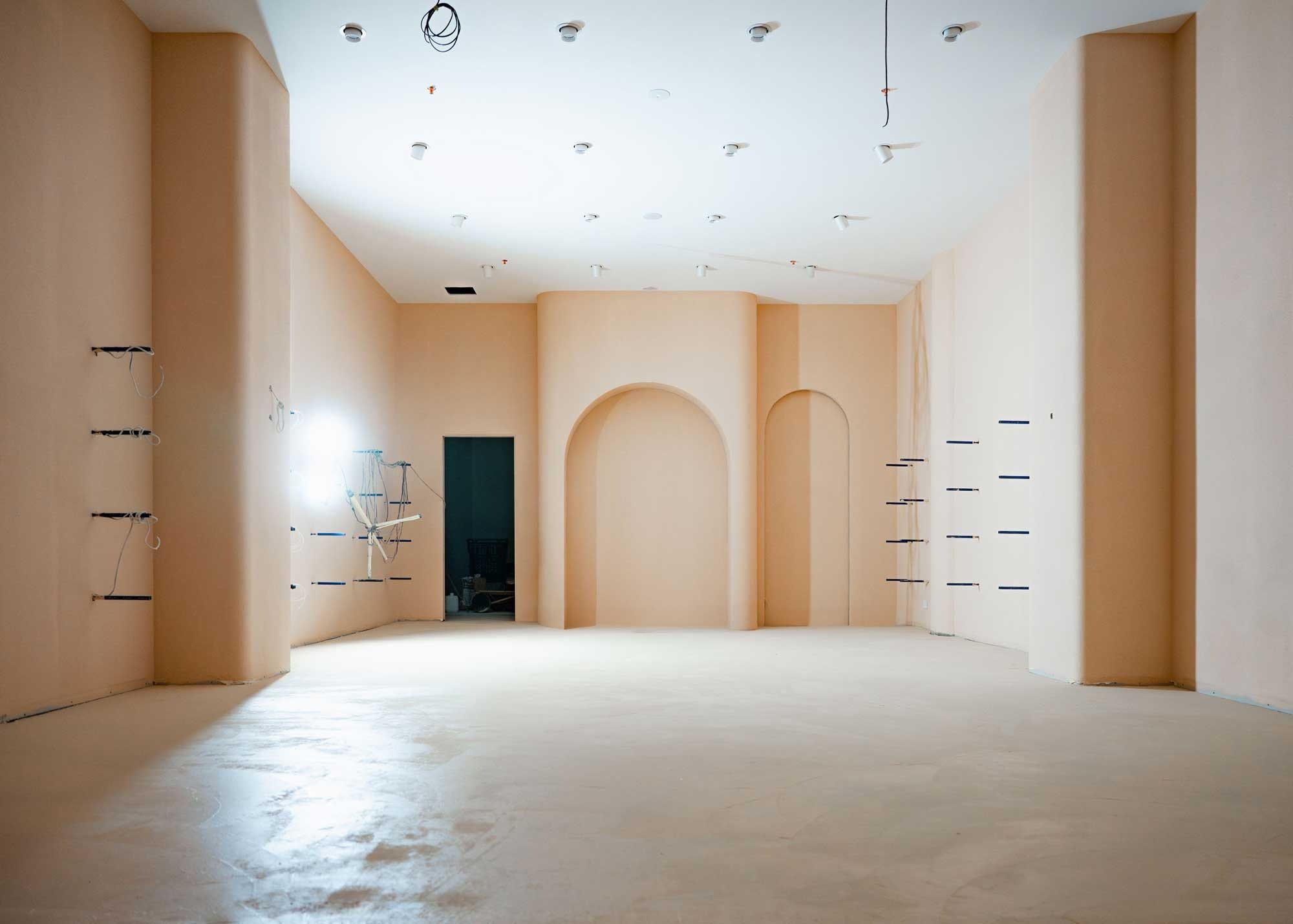
Silica-free microcement is a microcement formulated without crystalline silica, the mineral whose fine dust causes silicosis. Decora Diamond Floor, the microcement we install, is a resin-based, silica-free coating: the product contains no crystalline silica and neither does the finished surface.
That matters more in Australia since July 2024, when engineered stone was banned nationally. Here is what silica-free means, what it doesn't cover, and how to check any product yourself.
What is crystalline silica, and why is it a problem?
Crystalline silica is one of the most common minerals on earth. Quartz is its most familiar form, and it is found in sand, natural stone, concrete, brick, mortar and many tiles. In a solid surface it is harmless. The danger is dust: cutting, grinding, sanding or drilling a material that contains it releases particles small enough to reach deep into the lungs, known as respirable crystalline silica.
Breathing that dust over time can cause silicosis, an incurable lung disease, as well as lung cancer, kidney disease and other lung conditions. The national workplace exposure standard for respirable crystalline silica is 0.05 mg/m³ averaged over an eight-hour day, a very small amount.
What changed with the engineered stone ban?
From 1 July 2024, Australia banned the use, supply and manufacture of engineered stone benchtops, panels and slabs. Engineered stone typically contains far more crystalline silica than most natural stone, and workers fabricating it were developing silicosis at alarming rates.
The ban did not end silica risk on building sites. Concrete, tiles, natural stone and many cement-based products still contain it, and the rules around working with them have tightened. In Victoria, for example, employers must prepare a hazard control statement before high-risk crystalline silica work. So anyone choosing a new benchtop, vanity or floor finish is now asking a fair question: what is in it?
What does "silica-free" mean for Decora Diamond Floor?
Decora Diamond Floor is described in its technical data sheet as a single-component decorative finish based on modified polyurethane resins in water, with graded aggregates. It is formulated without crystalline silica, which means:
- The product carries no crystalline silica, so mixing, applying and working it on site does not create silica dust.
- The finished surface contains none. If a floor or benchtop is later drilled for a fixing or repaired, the microcement layer itself releases no silica.
Its safety data sheet is available from us on request, so you don't have to take that on trust.
What doesn't silica-free cover?
The surface underneath. Microcement is a coating a few millimetres thick, and preparing what it goes over can still produce silica dust:
- grinding existing tiles or concrete to give the coating a sound key;
- cutting out loose or drummy tiles;
- chasing, coring or patching concrete and masonry.
That dust comes from the existing building, not the microcement. We control it on site with extraction and the right protective equipment, and it is worth asking any installer how they handle it, especially in an occupied home or a business that stays open.
How can you check whether a product contains silica?
Ask for the safety data sheet (SDS) and read section 3, the composition. Look for:
- "Crystalline silica", "quartz" or "cristobalite" in the ingredient list.
- CAS number 14808-60-7 (quartz) or 14464-46-1 (cristobalite).
Two details catch people out. First, "amorphous silica" is a different, non-crystalline material, and it is not the dust hazard behind silicosis. Second, a product described as "low silica" still contains some. "Silica-free" should be backed by a composition section that lists no crystalline silica at all.
The product name alone doesn't tell you. Microcement is a broad category: some products are cement-based and use mineral sand aggregates, others are resin-based. The data sheet is the only reliable answer.
Is microcement a good alternative to stone benchtops?
For many kitchens, vanities and joinery, yes. Microcement wraps a joinery carcass in one continuous surface, with no slab joins, no silica, and the same finish able to run onto the floor and walls. At 330 Collins St, curved plywood seating bases were given reinforcing mesh coats, then finished in the same microcement as the floor and walls, so the whole room reads as one material.
It is a different material from stone, though, and it is worth knowing how. It is a sealed coating, so heat, oils and harsh cleaners need more care: hot pots go on a board, spills are wiped up promptly, and cleaning is with a neutral, non-abrasive product. The sealer is part of the surface's performance, and following the care instructions is a condition of our 7-year workmanship warranty.
Microcement joinery starts from $500/m² plus GST. Our microcement cost guide explains what moves the price.
Does silica-free change anything in a bathroom?
No. Silica-free describes what the coating is made of, not whether it keeps water out. In a bathroom, shower or laundry, microcement is the decorative finish and a certified waterproofing membrane goes underneath it, over a substrate with the falls already formed, under AS 3740, the Australian standard for internal wet areas. Our guide to microcement bathrooms and waterproofing sets out every layer and who certifies it.
What should you ask an installer?
- Which microcement product will you use, and can I see its SDS?
- Does section 3 list crystalline silica, quartz or cristobalite?
- What preparation will the existing surface need, and will it create dust?
- How will you control that dust, and is the home or business occupied while you work?
- What sealer goes on top, and what care does it need?
The short answer
Silica-free microcement gives you the seamless look of concrete or stone without crystalline silica in the product or the finished surface. Preparation of the existing building still needs proper dust control, and a data sheet is the way to check any claim. You can read more about Decora Diamond Floor, and architects and designers can use our microcement specification guide. If you're weighing up a benchtop, vanity or floor, tell us about the space and ask for the data sheet if you'd like to see it.